Pulsatile tinnitus is a rhythmic sound that matches your heartbeat. It is often caused by a narrowing (stenosis) in one of the venous sinuses in the brain, leading to turbulent blood flow. Treating the root cause by reopening the narrowed segment with a stent restores normal blood flow and eliminates the sound in the majority of patients.
It is a rhythmic sound that matches your heartbeat, heard in one or both ears or in the head. It is different from non-pulsatile tinnitus, which is usually not related to blood flow.
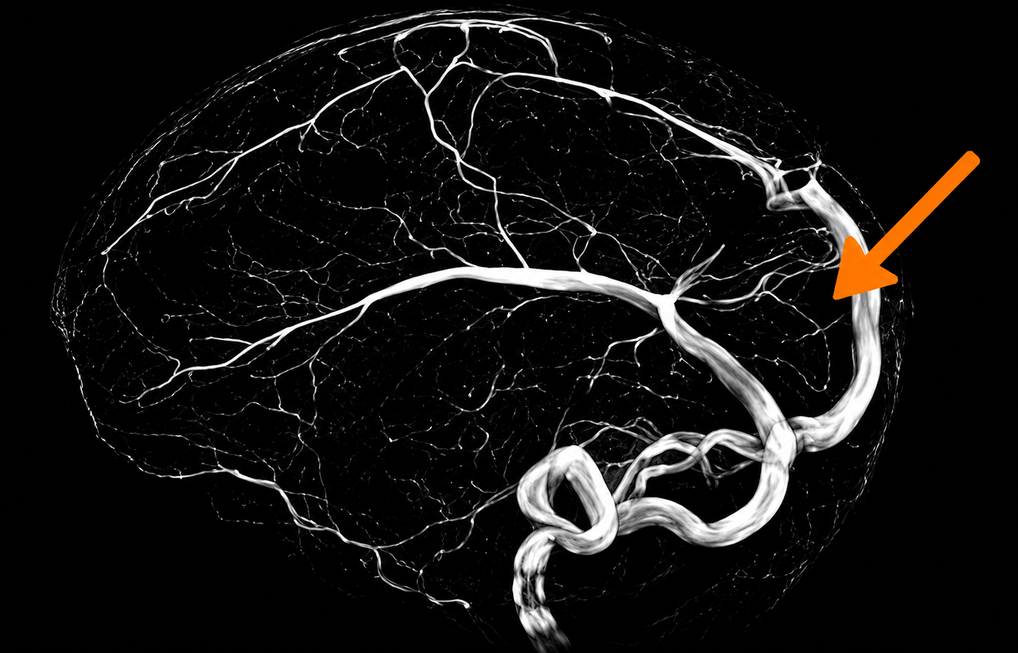
During venous sinus angiography, the pressure difference across the narrowed segment is measured:
Pressure before the stenosis (proximal)
-
Pressure after the stenosis (distal)
=
pressure gradient > 8 mmHg is considered significant.
A significant gradient confirms that the narrowing is causing the abnormal venous flow and is the source of the symptoms
A small catheter is inserted through a vein in the neck (jugular vein) or groin under local anesthesia.
A catheter is guided to the venous sinus and angiography is performed to confirm the stenosis and measure pressure.
A microguidewire is safely passed across the narrowed segment of the venous sinus.
A stent is deployed across the narrowed segment to open the sinus and restore normal blood flow.
Normal blood flow is re-established, turbulence stops, and the pulsatile sound disappears in most patients.
The Fact: The cause determines the appropriate treatment, and treating the narrowing with a stent is the safe and effective solution.
Have questions? Our team is here to guide you every step of the way.
Proven modern techniques with an excellent safety profile
High success rate and long-lasting relief
Individualized treatment plan for each patient
Return to daily activities within a short time
This information is for educational purposes only and is not a substitute for consultation with a specialist physician.
An interventional radiology consultant will evaluate your condition and determine the appropriate course of action for you.
WhatsApp us